The first week of middle school ELA doesn’t have to be overwhelming. These 10 back-to-school tips for ELA teachers will help you start the year feeling calm, confident, and connected to your students.

Picture this: you walk into your Pinterest-perfect classroom, channeling the wisdom of Mr. Feeney. Your angelic students hang on your every word, their parents send heartfelt thank-you notes, and your administration has stocked your supply closet with Inkjoy pens and Cheez-Its. Bliss.
Then reality hits. You’re learning 30 new names, setting up routines, managing a room full of kids who are simultaneously nervous and dramatic, and trying to remember where you put your attendance sheet. All before 9 a.m.
No Cheez-Its in sight.
If you’re a new middle school ELA teacher heading into your first (or second, or third) back-to-school season, here’s the truth: you don’t need to have everything figured out. You just need a solid plan for the first week. And a few go-to strategies that will make everything run more smoothly.
1. Prioritize Relationships Before Rigor
Experienced ELA teachers will tell you: students don’t care how much you know until they know how much you care.
That’s not just a smaltzy saying—it’s classroom management strategy.
Middle schoolers are at an age where belonging matters enormously. When students feel seen and known by their teacher, they’re more likely to participate, take risks, and behave well.
Connection is your classroom management plan, especially in those first few weeks. This post contains lots of ideas for building connection.
Connection is your classroom management plan.
2. Use One Strong Icebreaker Instead of Five Forgettable Ones
There’s a tendency in the first week to cram in a dozen get-to-know-you activities, thinking more is better. It’s not. Five random icebreakers feel scattered and surface-level. One thoughtfully chosen activity is where real community begins.
The best icebreakers aren’t just fun. They’re strategic. I use a back to school / first week one-pager activity name tent because it does exactly this. Students complete a creative one-pager about themselves that covers their favorite topics and personality highlights. It then folds into a name tent for their desks. The name tent makes learning names fast, doubles as classroom décor, and gives students a genuine way to share who they are from day one.
3. Choose Activities That Pull Double Duty
Starting with a boring syllabus on Day 1 is a great way to ensure your kids don’t remember a thing. They’ll be doing that in every other class, so don’t be surprised if they get them all jumbled up. Instead, start with a fun and practical stations activity that accomplishes more than one goal at a time. Build community and assess writing. Teach routines and practice collaboration.
Stations are the answer! You can customize them to your specific needs. These are the back-to-school stations I love. They don’t just pull double duty, they pull quadruple duty!****
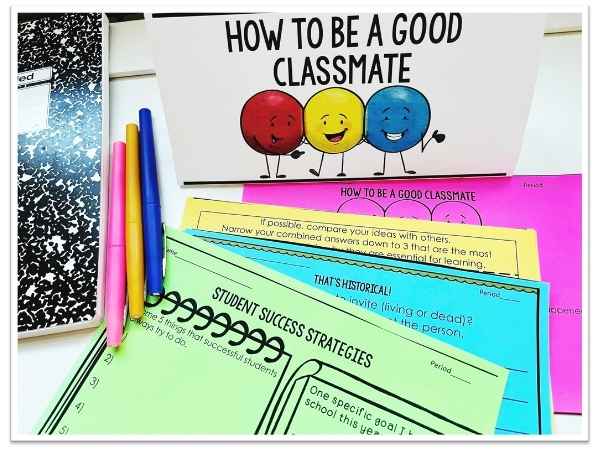
- ALL About Me: get to know your students while they make a name tent for their desk
- Teacher Success Strategies: relationship building
- Student Success Strategies: goal-setting and growth mindset
- How to Be a Good Classmate: create a positive classroom community
- That’s Historical: fun activity that will give you information about students’ writing skills and values
- Let’s Work Together: kids will collaborate to solve a problem
- Course Syllabus
- Class Policies
Station-based activities give students structure and keep energy moving, without requiring you to run a complex lesson while you’re still learning everyone’s name. If you’d like “done-for-you stations,” check out this resource: Back-to-School Stations for Middle School ELA.
4. Keep the First Week Engaging, but Simple
The first time I taught an advanced 8th grade class, I thought I’d wow them by teaching Shakespeare’s Sonnet 18 on the first two days. It took a week. All I can say is “Shall I compare me to an idiot?” Because I am one.
Over-planning is one of the most common mistakes new teachers make in their first week. The pressure to impress, to cover everything, to prove you know what you’re doing leads to overstuffed lesson plans that collapse under the weight of real students in a real classroom.
The first week of school should be engaging and purposeful, but it doesn’t need to be complicated. Choose activities that are fun to facilitate and easy to manage, especially while you’re still figuring out the room’s dynamics.
It took me a long time to create first week activities that don’t crash and burn. Now I’m in love with the practical, easy-to-use one-pager and first week stations.
5. Teach Routines Like They’re Part of the Curriculum
New teachers often assume students know how to enter a classroom, transition between activities, get materials, or participate in a discussion. They don’t. Or at least, they don’t know your way of doing things.
How should students enter the room? What do they do when they finish early? How do they submit work? Walk them through it. Model it. Practice it. Then practice it again.
Think of it this way: every 10 minutes you invest in modeling routines in September saves you hours of redirection in October.
6. Plan With Your Future Self in Mind
August decisions become October problems or October lifesavers—depending on how you make them. When you’re setting up systems in the first week, think beyond the next five days.
Ask yourself these questions:
- What kind of warm-ups will I use? (I like spiral reviews, and this is why.)
- What will my grading workflow look like? Will I collect and grade one assignment a week? Two? Three?
- Am I prepared for days when technology fails or plans change? Building reusable routines and systems now means you won’t be reinventing the wheel every Monday morning.
- Do I have emergency lessons ready in case I have to be absent unexpectedly?
- Will I be planning independently or with a co-teacher, interdisciplinary team, or departmental partner?
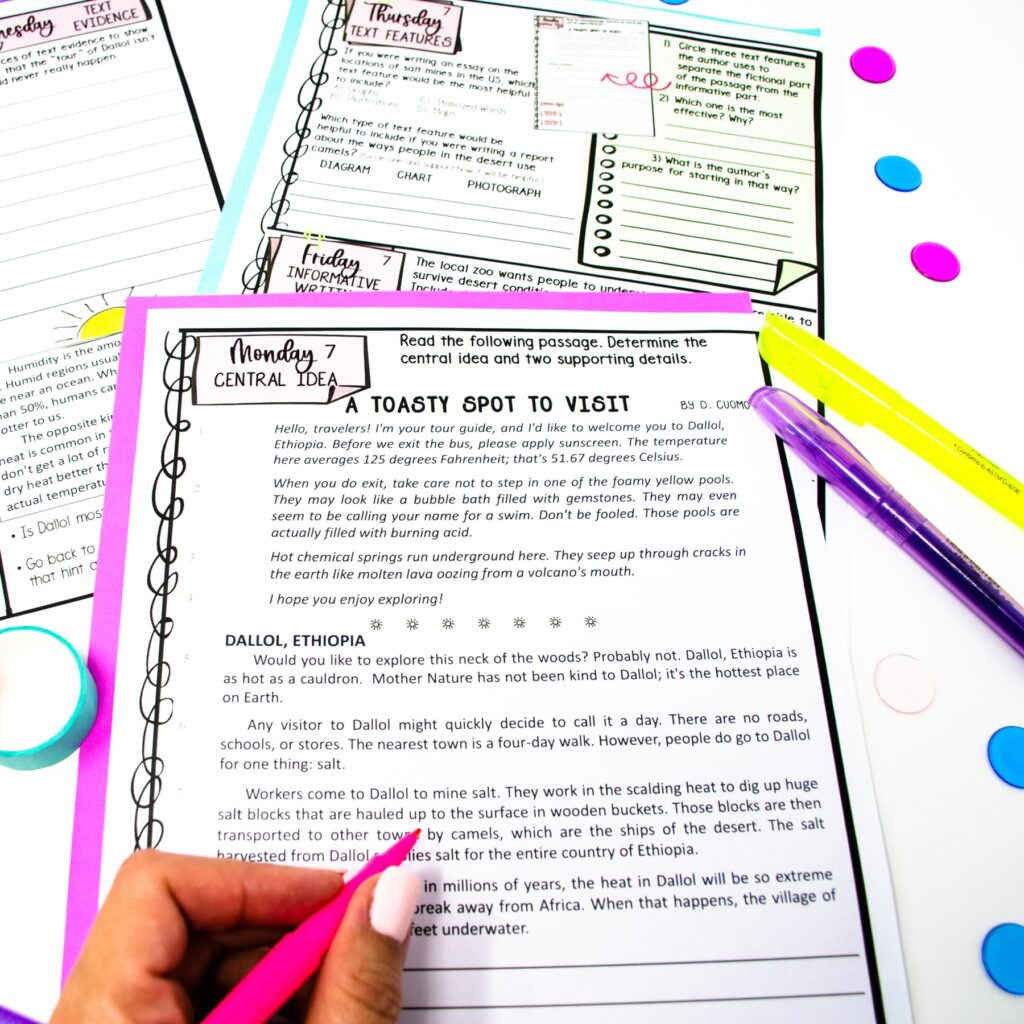
This is also a good time to resist the urge to create everything from scratch. Your teammates, websites like TPT, and even old textbooks are sources of high-quality, teacher-tested resources. Anything designed to simplify your planning will help you feel more confident and sane. That’s not cutting corners. It’s smart teaching.
7. Have a Sub Emergency Binder Ready
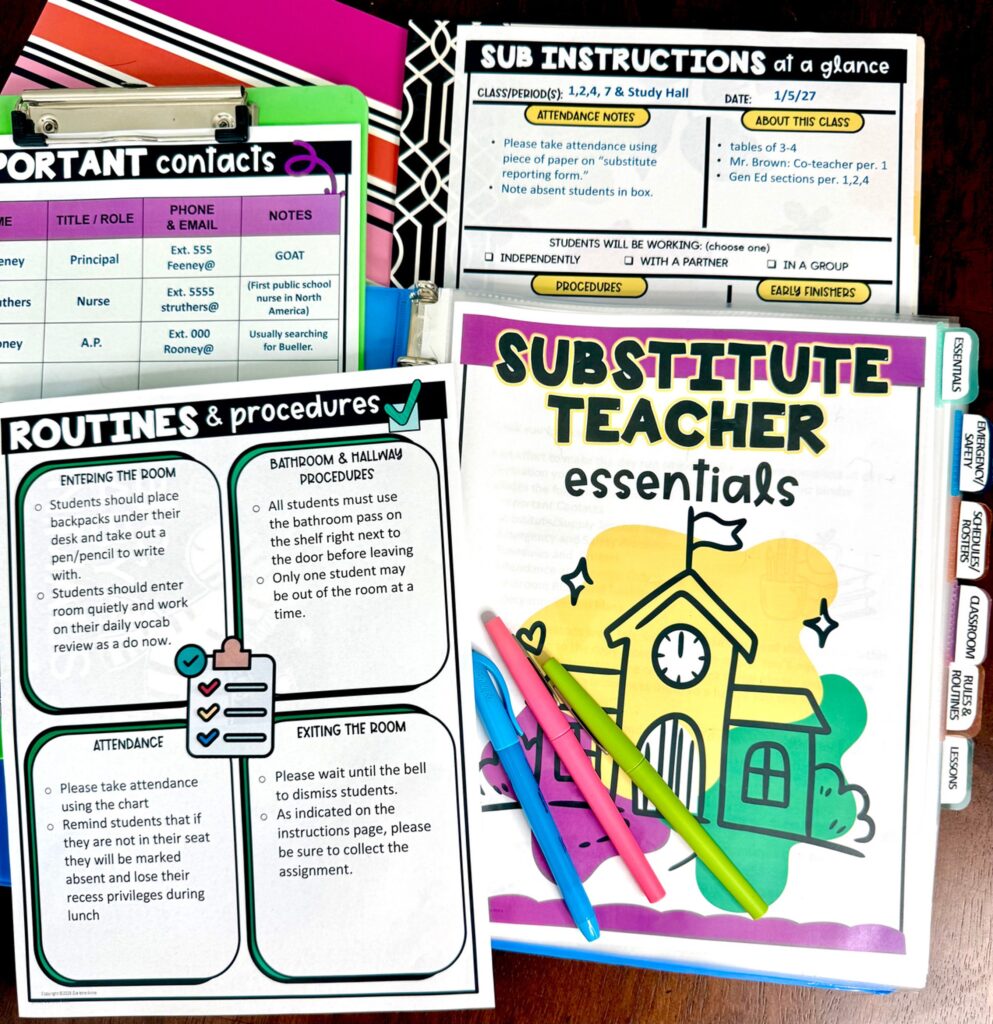
Life happens, and you’ll want to be ready when it does. A sub emergency binder can save you a lot of aggravation. Having everything prepped and ready to go means your students keep learning, your substitute feels confident, and you avoid any last-minute panic. A little prep now goes a long way later.
To create an effective sub emergency binder, start with attendance procedures, a current class roster, and seating charts to help your substitute navigate your classroom with ease. Include clear instructions for emergency drills and contact information for administration and colleagues as an added safety net. Round it out with a handful of engaging, easy-to-implement emergency lessons that don’t require your presence.
A sub binder is your lifeline for smooth classroom management and continued learning in your absence.
8. Keep a Few Low-Prep Wins Ready to Go
The first month of school can be unpredictable, and that’s okay! Schedules change, technology glitches, and even the most enthusiastic class can have an off day. It happens to every teacher!
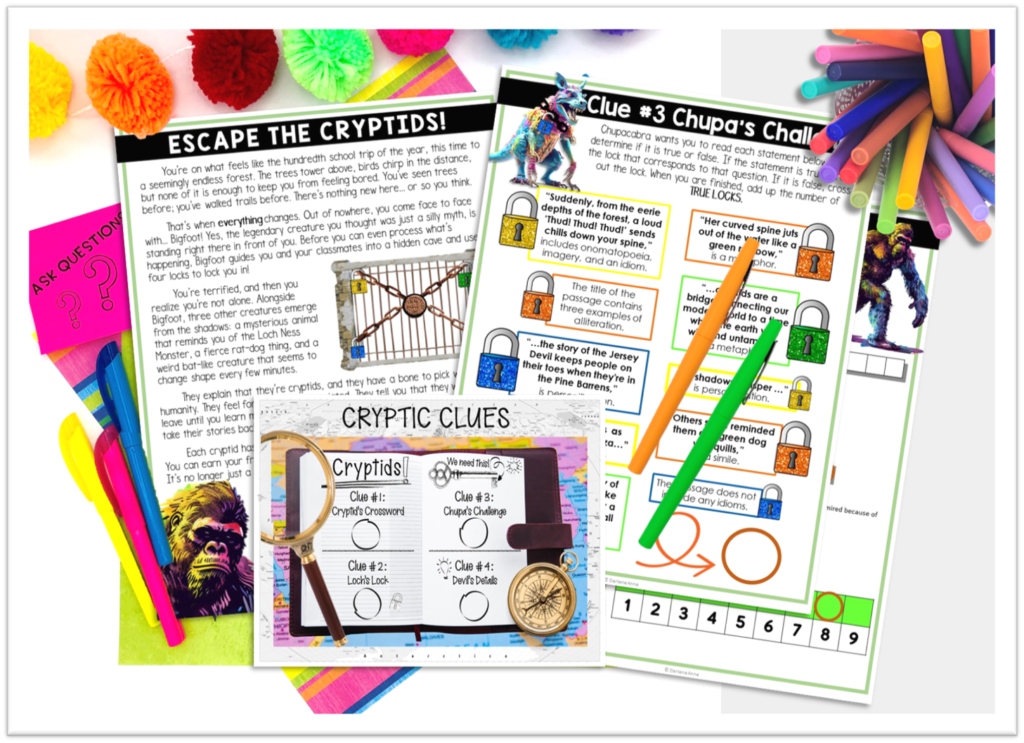
Every new ELA teacher needs a small bank of dependable, low-prep lessons they can pull out when plans need to change fast. These aren’t throwaway activities—they’re solid, purposeful middle school ELA activities that work on short notice and don’t require 45 minutes of setup. Having two or three of these in your back pocket will save you more than once.
My go-to low-prep wins are escape rooms. Kids have so much fun doing them that they don’t even know they’re learning.
9. Don’t Stress Over Classroom Décor
Let’s be real. Your smile is the best classroom decoration you can have, and no amount of perfectly coordinated bulletin boards can beat that. So when it comes to decorating, keep it simple and purposeful.
Useful trumps decorative every time. I always have up a text evidence stems bulletin board. It’s something the kids rely on and I have them use the notesheet to copy the stems for use in other classes.
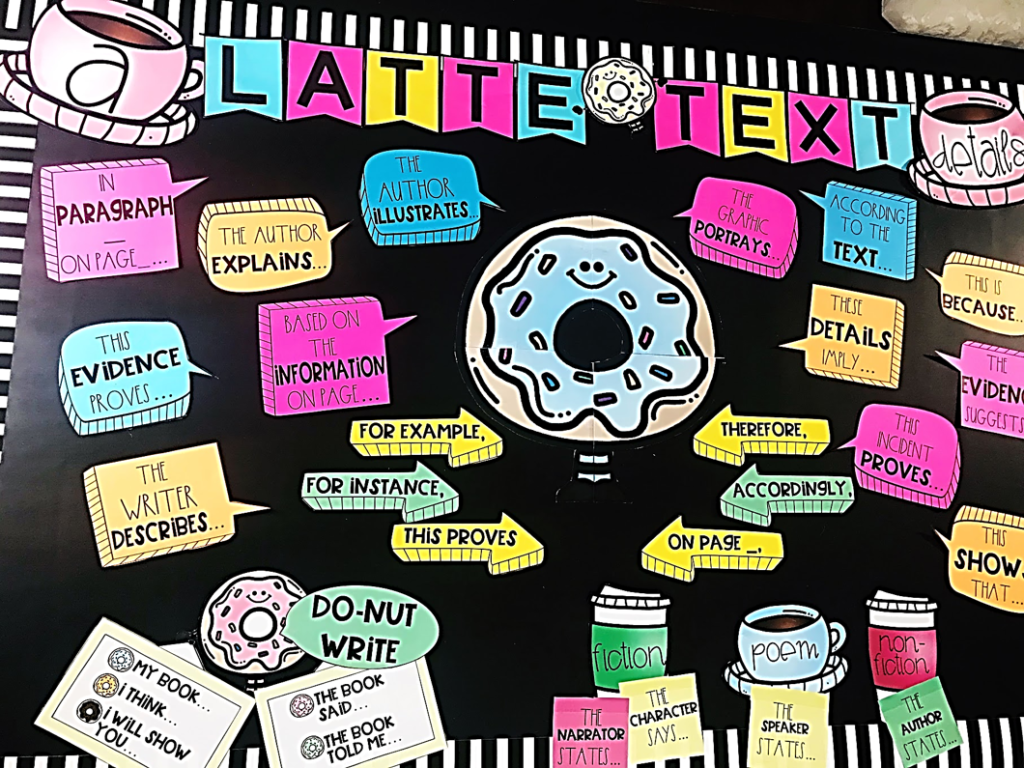
Word wall bulletin boards are also both decorative and incredibly useful. It’s easy to set up, looks great, and doubles as a learning tool your students will actually use. Learn more about how to use word walls here. I wrote about how to use word walls here.
Save your energy for connecting with your students. Their engagement will light up the room more than any strand of fairy lights!
10. Remember: You Do Not Need to Build Your Entire Year in Week One
This is one of my favorite back-to-school tips for ELA teachers: you cannot do everything at once, and you shouldn’t try.
Your job in the first week is not to be a perfect teacher. It’s to create a classroom that feels safe, structured, and worth showing up to every day. That means focusing on momentum over perfection—getting small wins, building trust, and laying the groundwork for the routines and relationships that will carry you through the year.
Using high-quality, ready-made materials is not a shortcut. It’s sustainable teaching. When your planning load is lighter, you have more energy for the part of the job that actually matters most: being present for your students.
The First Week Sets the Tone—Make It Count
Your first week doesn’t have to be perfect. It just has to be intentional. Focus on building relationships, establishing routines, and choosing purposeful activities that set the tone for the rest of the year.
The best middle school ELA teachers aren’t the ones who do it all perfectly. They’re the ones who know how to make the most of the tools available to them.
Here’s to a strong, connected start to the school year. You’ve got this! ????
Back-to-School Tips for ELA Teachers: Frequently Asked Questions
What should a new middle school ELA teacher do on the first day of school?
On the first day, prioritize making students feel welcome and establishing basic routines. Avoid overloading students with information or jumping straight into academic content. A structured, low-stakes getting-to-know-you activity—like a one-pager or station rotations—helps build community while giving teachers useful insight into their students.
What are the best back-to-school activities for middle school ELA?
The best first-week ELA activities accomplish more than one goal: they build classroom community, give teachers a read on students’ writing or reading skills, and establish a positive tone. Station-based activities and creative one-pager assignments are popular, practical choices that work well in grades 5–8.
How do I establish classroom routines in a middle school ELA class?
Treat routines as content. Explicitly model each routine. Consider how students enter the room, how they get materials, how they participate in discussion, and practice them multiple times. Repetition in the first two weeks significantly reduces classroom management issues later in the year. Clear, student-friendly posted directions help routines stick.
How long does it take to establish routines in a middle school classroom?
Most classroom management experts recommend spending the first two to three weeks explicitly teaching and reinforcing routines before expecting students to follow them independently. Consistency is key. Routines that are practiced daily become habits much faster than those that are introduced once and then assumed.
Is it okay for ELA teachers to use premade resources or should they create their own materials?
If you take anything from this post on back-to-school tips for ELA teachers, let it be this one: No one expects new middle school ELA teachers to make their own resources. They will benefit most from using high-quality premade resources, at least in their first few years. Creating everything from scratch is time-consuming and unsustainable. Well-designed, teacher-tested materials free up energy for relationship-building and instructional decision-making—the parts of teaching that can’t be handed off.
It’s taken me years of teaching to learn these back-to-school tips specifically for ELA teachers. Feel free to share with other teachers needing them! 🙂